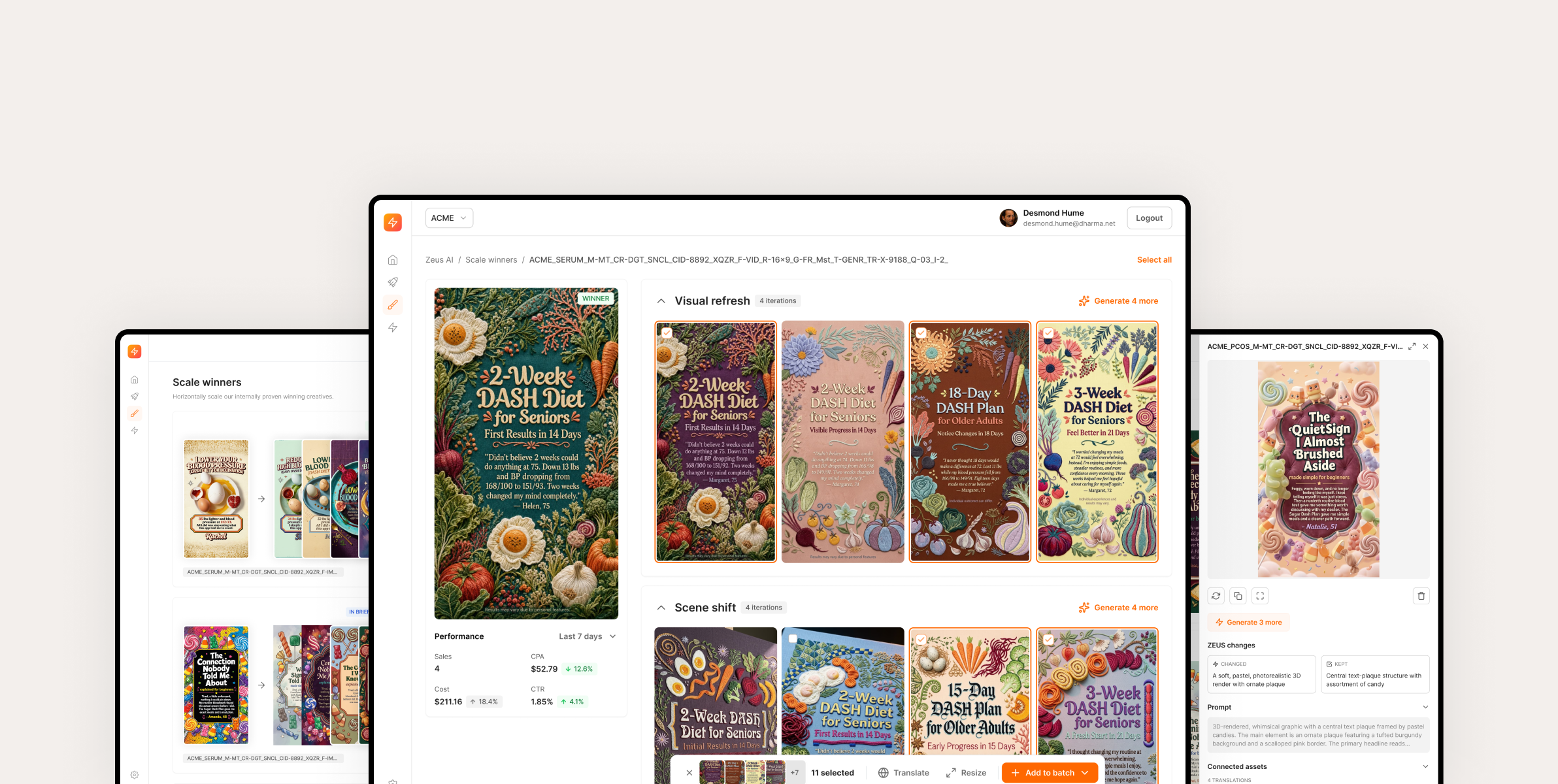
Showcase
The promised further AI escapades
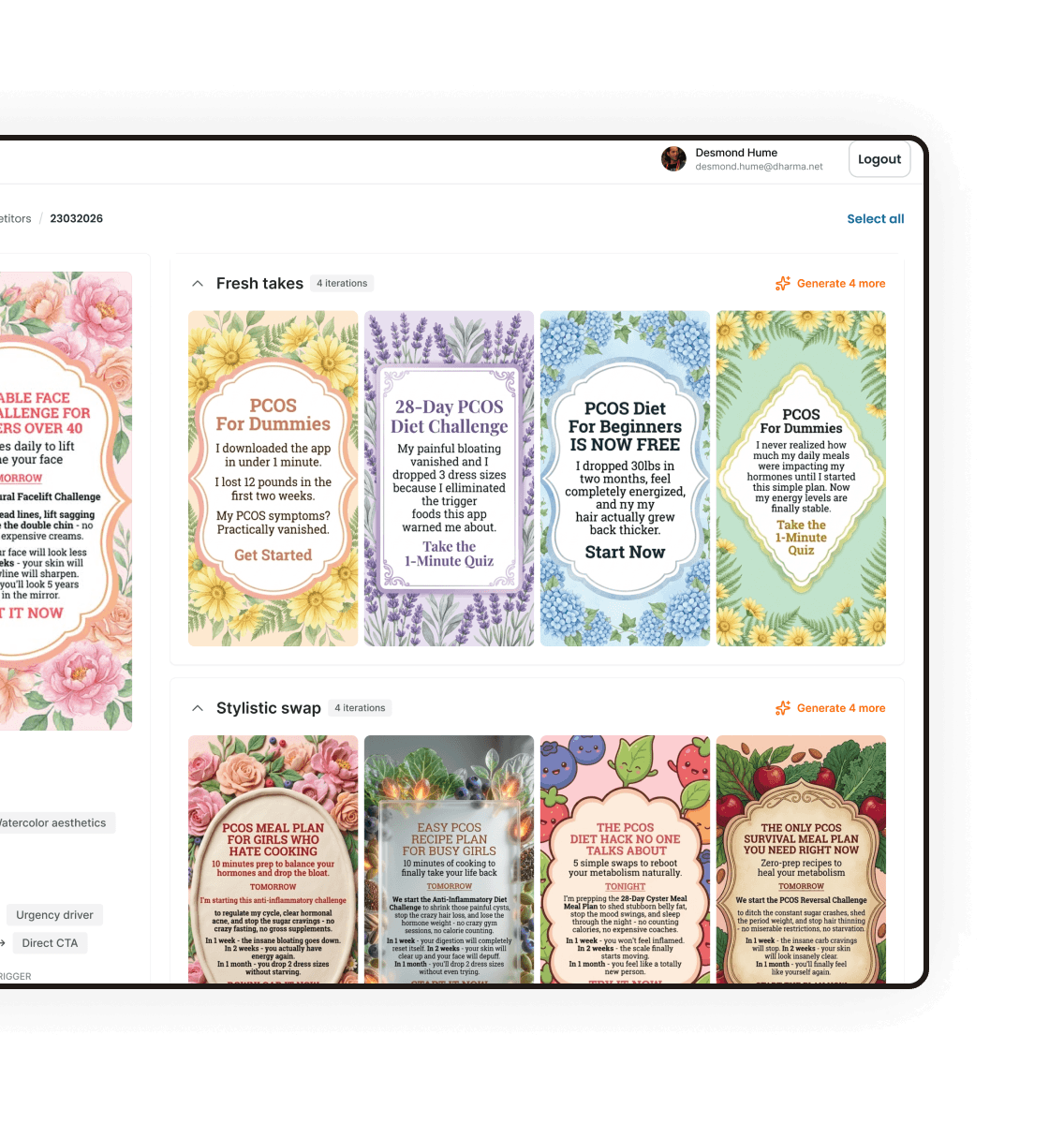
Competitor cloning
What is it
Takes competitor ads and turns them into creatives fitting our current angles, chosen by users. The analyser compares topics, removes anything brand-specific, transforms topic if needed, then applies the visual and copy transforms we know and love from winner iterations.
What I learnt
Cloning meant very different things to team members, for some it meant visual and ad copy cloning; for others just taking visual inspiration. Navigating that to produce results for both camps is where the 4-tier approach shone.
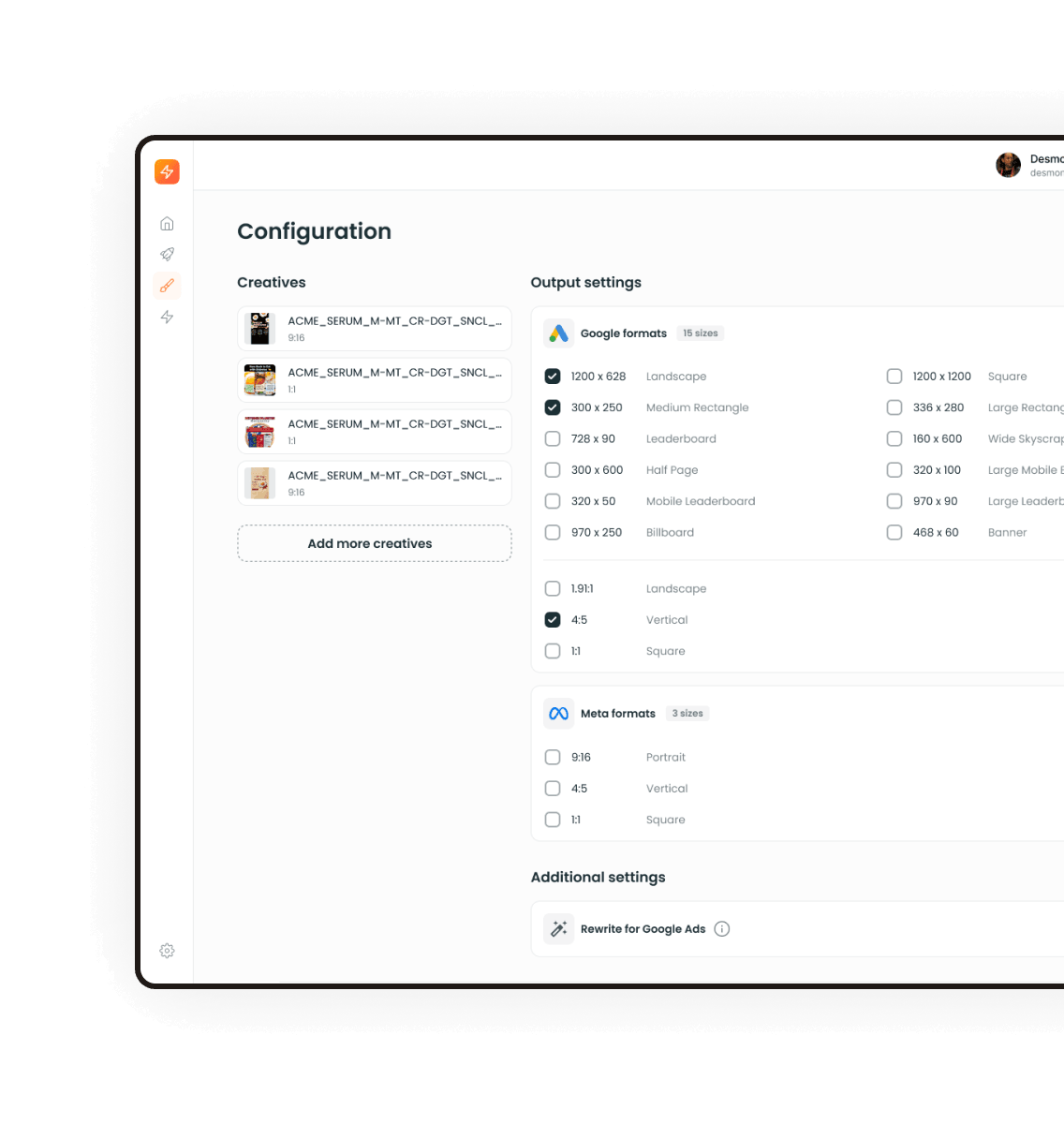
Ad resizer
What is it
Takes ads and resizes them to the selected Google sizes, because our team mostly designed creatives for Meta. It was up to the non-designer media buyer to create appropriate sizes for Google. Before, they spent hours prompting AI to resize creatives one by one, now they could add e.g. 10 ads, pick 3 sizes, and get 30 outputs with 5 clicks.
What I learnt
Generic prompts failed when upscaling, because they mostly just filled the remaining space, and failed when downscaling because they stepped outside the safe zone, so I built a multi-step AI workflow. While this V2 version is not live, the new outputs were approved even by designers.
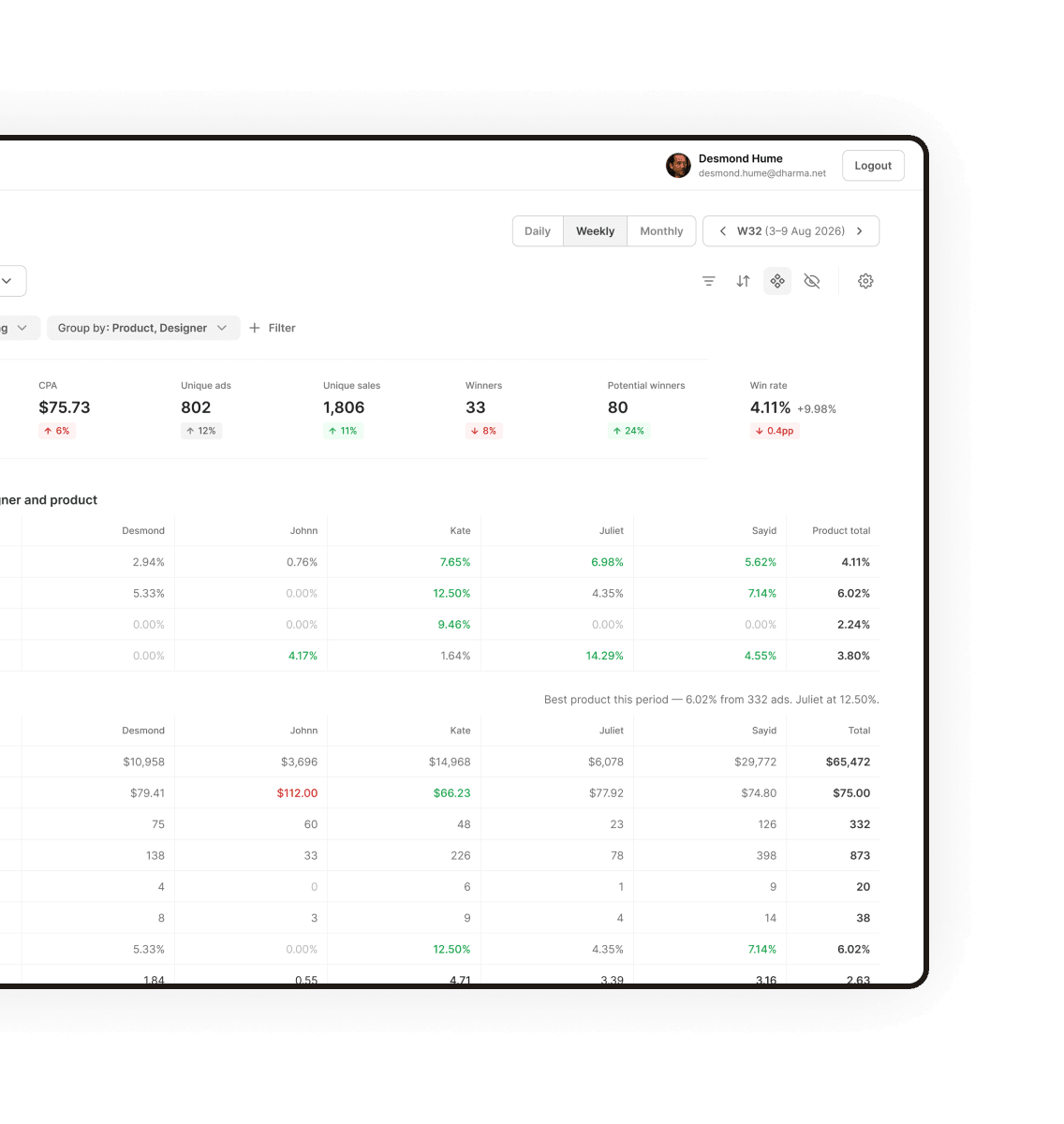
Performance reporting
What is it
Saving 2 hours weekly for multiple team members, by automating daily, weekly and monthly reporting. Filtering, grouping, and conditional formatting allow for further analysis. The prototype I showed to team members were built with our own design system with Claude Code using real data, fully functional features. The Zeus version shipped not long after, and was tested by the team to collect improvements.
What I learnt
When Claude has access to a design system it can speed up a design process immensely. I honestly felt like I was transported back to building detailed prototypes with Axure relying on spreadsheets the client provided.
Funnel studio
What is it
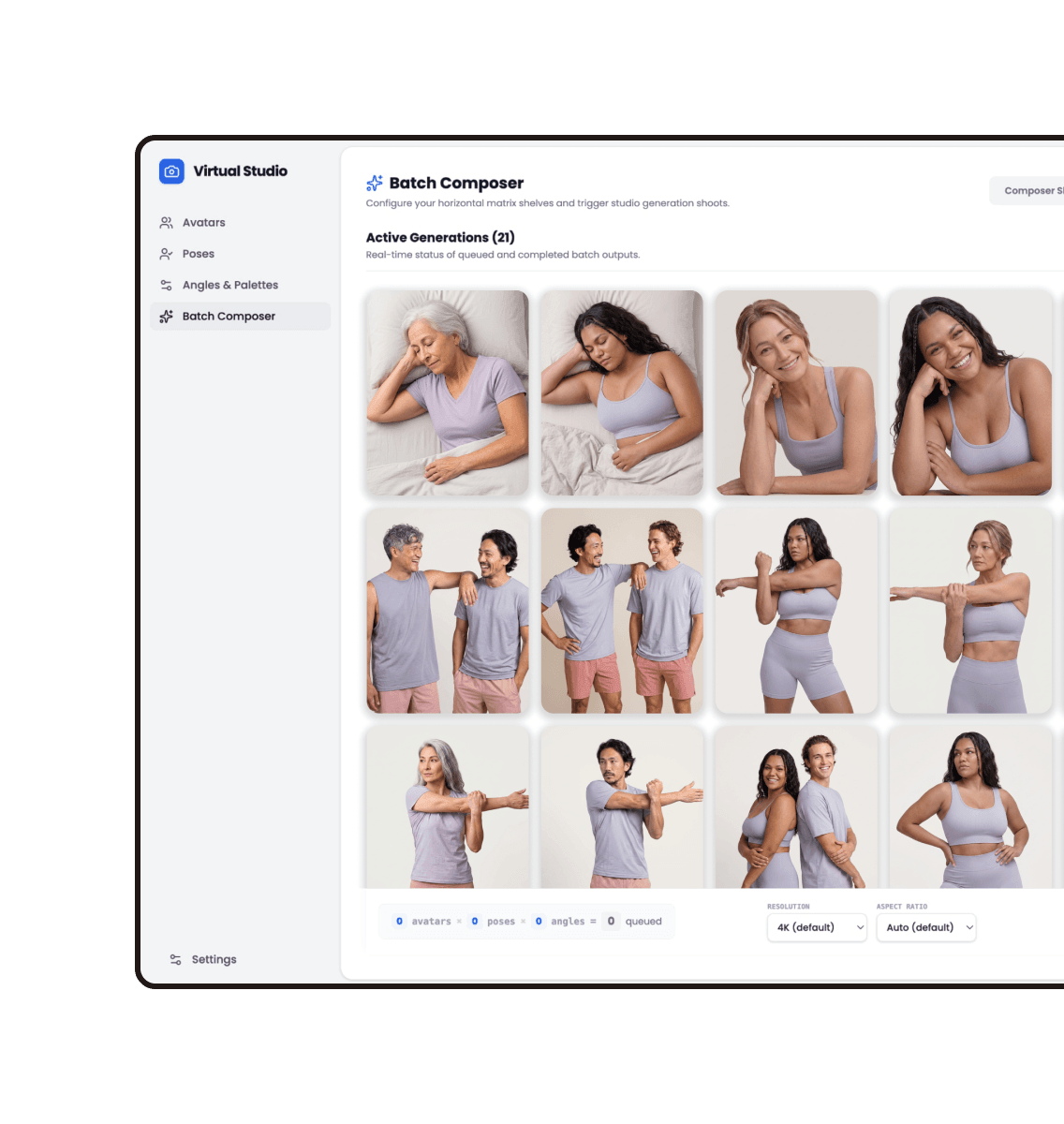
Saying goodbye to Zeus for now, this AI studio mini app made it possible for web funnel designers (a coworker and I) to upload avatars, poses and colour palettes. The AI analysed those assets, wrote descriptions, and we could pick any avatar, any pose and palette to batch generate visuals for angle-specific funnels, which all have different branding.
What I learnt
Gemini does not like multiple references, so prompting Gemini to analyse and describe the uploaded people and poses in excruciatingly detailed descriptions and using them to generate results was the way to go.